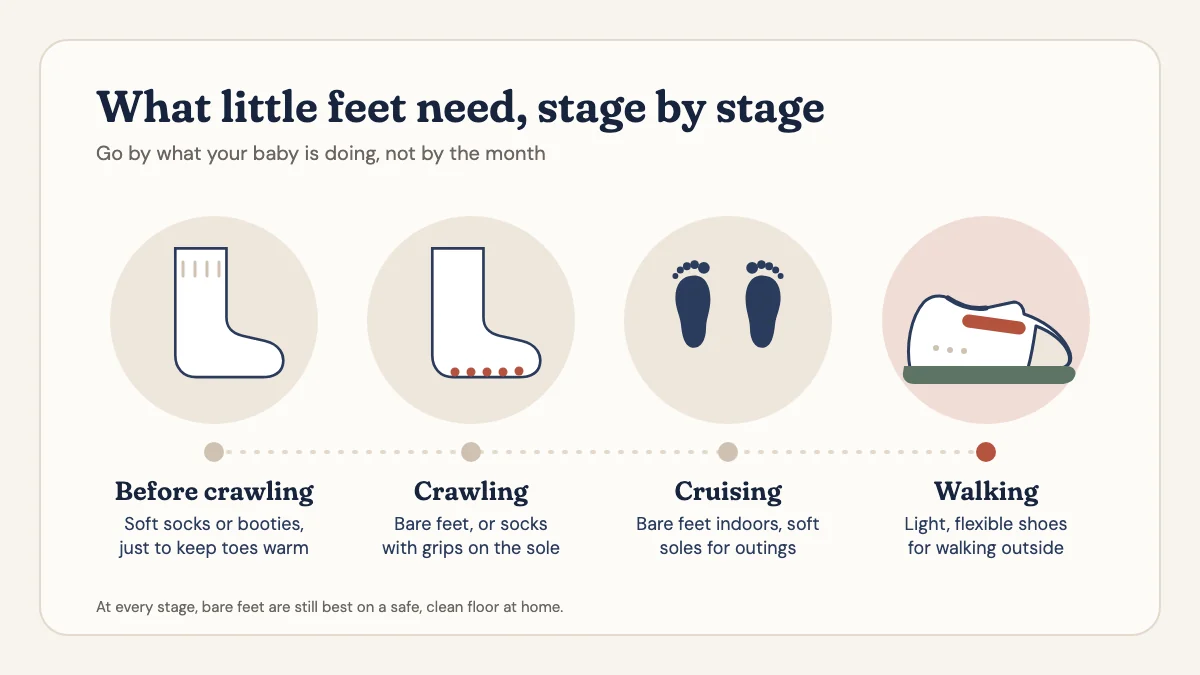
Baby feet don’t need much. What they do need changes as your baby goes from lying on a play mat to crawling, cruising and walking. It helps to think in stages rather than months, because every baby reaches each one at their own pace.
Before crawling: something warm
Young babies only need something on their feet to stay warm. Soft socks or fabric booties are plenty. Look for a gentle cuff that stays on without leaving a deep mark around the ankle.
Shoes at this stage are really for photos. If you put a pair on for a family event, choose soft, flexible ones and take them off afterwards.
Crawling: bare feet, or socks with grips
Crawling babies push off with their toes, and bare feet grip most floors best. If your floors are cold or slippery, socks with rubber grips on the sole let them push without sliding. Nemours KidsHealth says socks or booties with non-skid soles are fine for chilly toes.
Cruising: bare feet at home, soft soles for outings
Once your baby pulls up and shuffles along the furniture, bare feet are still the best choice at home. For trips to a friend’s house, the store or daycare, soft-sole shoes protect their feet while still letting them bend and feel the ground. Hard, stiff soles get in the way at this stage.
Walking: light, flexible shoes for outside
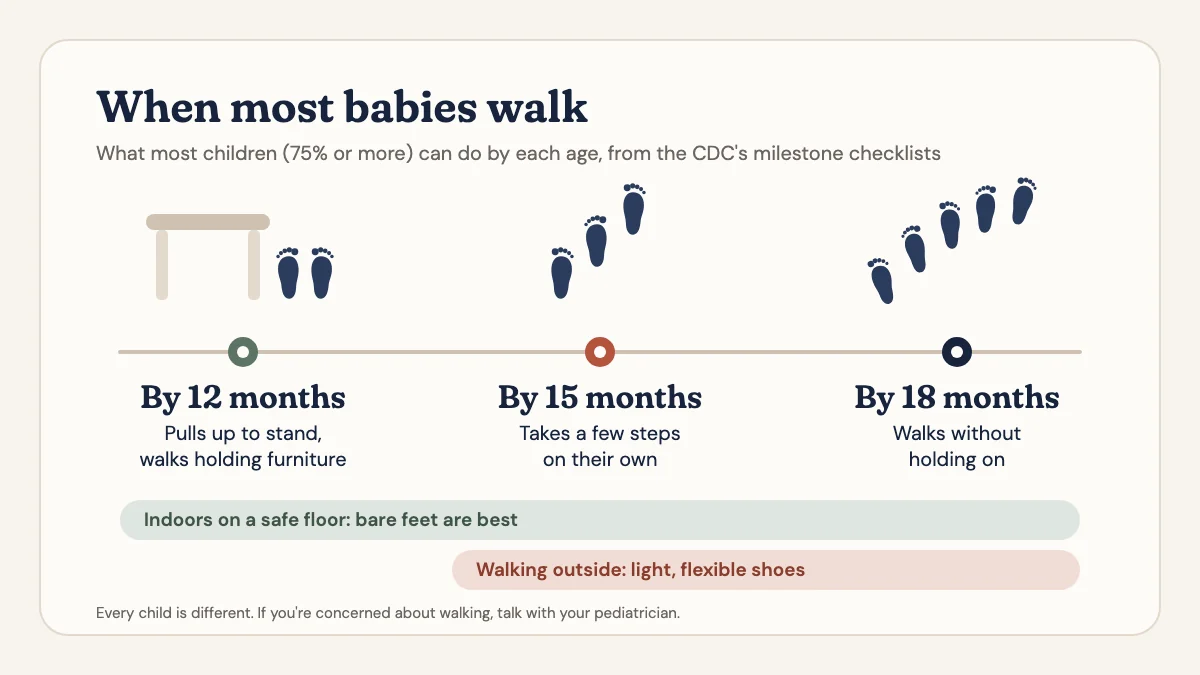
According to the CDC, most children take a few steps on their own by 15 months and walk without holding on by 18 months. Once yours is walking, shoes become useful outdoors: sidewalks, playgrounds, parking lots. Choose a light, flexible pair with a non-slip sole and a little room to grow. Inside, bare feet are still fine on a safe floor.
For the details, see when babies should start wearing shoes and how to measure your baby’s feet.
A few things to skip
- Hard, stiff soles for babies who are still learning to walk.
- Shoes that are far too big. A little room to grow is good; extra length a new walker can trip over is not.
- “Corrective” or extra-supportive shoes, unless your child’s doctor recommends them. The Canadian Paediatric Society says most children don’t need special footwear.
The quick guide
| Stage | What goes on their feet |
|---|---|
| Before crawling | Socks or soft booties, for warmth |
| Crawling | Bare feet, or socks with grips |
| Cruising | Bare feet at home, soft soles for outings |
| Walking | Light, flexible shoes outside |
Our soft-sole first walkers are made for the cruising and walking stages: flexible soles, easy-on styles, sizes 3 to 7.
Sources
- Nemours KidsHealth: Is My Baby Ready for Shoes?
- CDC, Learn the Signs. Act Early.: milestones by 1 year, 15 months and 18 months
- Canadian Paediatric Society, Caring for Kids: Footwear for children
This guide is general information, not medical advice. If you have questions about your child’s feet or walking, talk with your pediatrician.