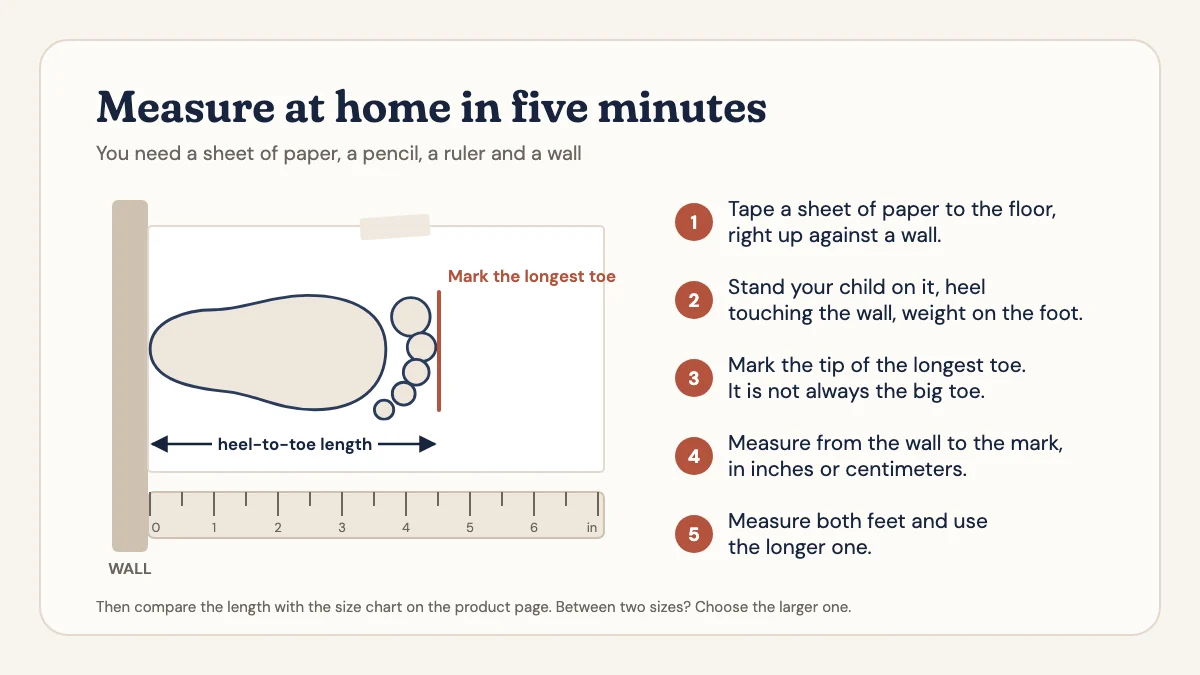
You don’t need a store’s foot gauge to find the right size. A sheet of paper, a pencil, a ruler and a wall will do it. The hard part is getting a toddler to stand still for ten seconds, so pick a calm moment, like after a nap or a snack.
What you need
- A sheet of plain paper and some tape
- A pencil
- A ruler or tape measure
- A wall with a clear patch of floor in front of it
- A second pair of hands if you can get one: one person steadies, the other marks
Step by step
- Tape the paper to the floor with one short edge pressed against the wall.
- Stand your child on the paper with their heel touching the wall. Their weight should be on that foot: feet spread out when they carry weight, so a standing measurement is the one that counts.
- Hold the pencil straight up and mark the paper just in front of the longest toe. For some children that’s the second toe, not the big toe.
- Measure from the wall to your mark. That’s the heel-to-toe length.
- Do the other foot too. It’s common for one foot to be a little longer. Go by the longer one.
If your baby isn’t standing yet, you can measure with them sitting on your lap, foot flat on the paper and knee bent. A standing measurement may come out a little longer, so check again once they’re on their feet.
Turning the number into a size
Sizes vary from brand to brand, so compare your measurement with the chart for the shoe you’re looking at rather than a general chart. On our product pages, each size shows the heel-to-toe foot length it fits. If your child is between two sizes, choose the larger one. Little feet grow fast, and a bit of extra room is easier to live with than toes pressed against the front.
Check the fit when the shoes arrive
Do these checks with your child standing up:
- Toes. Press gently at the front. You’re looking for about a thumb’s width, roughly ½ inch (1.25 cm), between the longest toe and the tip of the shoe.
- Heel. The heel should feel snug, so the foot doesn’t slide forward with each step.
- Sides. There should be a little space along the sides, with no bulging.
- Pinch. Pinch the material across the top of the shoe. A small crease is a good sign. If you can’t pinch anything, it may be too tight.
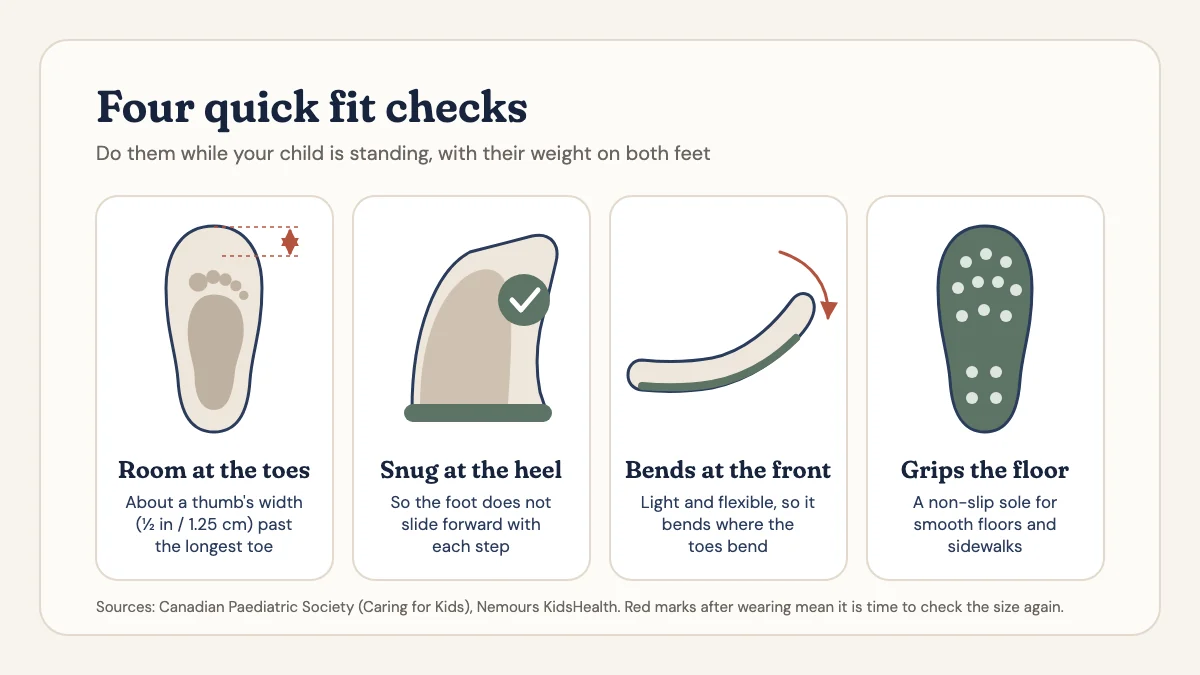
After the first wear, take the shoes off and look at your child’s feet. Red marks that don’t fade quickly mean something is rubbing.
How often to measure again
Often, at first. The Canadian Paediatric Society says that before 18 months, feet will probably grow more than half a shoe size every two months. Toddlers grow about half a size every three months on average, and after age three it slows to about one size a year.
In practice, that means checking every six to eight weeks in the first couple of years, and any time your child starts tugging at their shoes or fussing when you put them on.
Signs a pair has become too small
- Red marks or blisters after wearing
- Toes pressed against the front when they stand
- Shoes that are hard to get on, even with the straps fully open
- Your child pulls them off or doesn’t want to wear them
Every Cradlora product page has a size chart by foot length. Still not sure? Email your child’s measurement to [email protected], tell us which style you like, and we’ll help you pick a size.
New to shoes altogether? Start with when babies actually need them.
Sources
- Canadian Paediatric Society, Caring for Kids: Footwear for children
- Nemours KidsHealth: Is My Baby Ready for Shoes?
This guide is general information, not medical advice. If you have questions about your child’s feet or walking, talk with your pediatrician.